

© Champion Medical Services 2017
Pneumatic Compression Devices
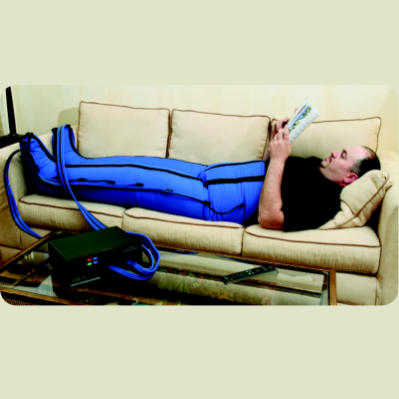
Champion Medical Services, Inc., has been the leader in Compression Therapy, Lymphedema Treatment & Management. Our products are from the industry’s premier manufacturers and are therefore guaranteed. "Compression Therapy for Treatment of Lymphedema, Venous Insufficiency, and Wound Healing" Although lymphedema has been observed for centuries, until recently little was understood about the disease. Only in the past 10 to 15 years have clinicians begun to seriously focus on its causes and treatment. Lymphedema is an accumulation of lymphatic fluid that causes swelling in the extremities (arms and legs). Edema, or swelling, occurs when veins and/or lymphatic vessels are impaired. When the impairment is so great that the lymph fluid cannot be transported back into the bloodstream, an abnormal amount of protein-rich fluid collects in the tissues of the extremities, making them swell dramatically. If lymphedema is not treated, the stagnation of this fluid causes normal lymph tissue channels to increase in size and number. Oxygen transport is impaired, resulting in slower wound healing and a higher risk for infections due to the affinity of bacteria for lymph fluid. Lymphedema that occurs on its own is called primary lymphedema. It can be present at birth or may develop later in life. either idiopathically (because of an unknown cause) or as a result of arterial or venous abnormalities, hemangioma, or lymphangioma. Breast or abdominal surgery can result in secondary lymphedema. Surgical removal of a tumor and the adjacent lymph nodes and vessels can block lymph fluid from flowing naturally through its system. Other surgeries that require lymph node removal are those performed for skin cancer (melanoma), gynecological cancers, bladder or colon cancer and prostate or testicular cancer. Surgery or other medical treatments can cause secondary lymphedema. Surgical removal of a tumor or the treatment of a tumor and the adjacent lymph nodes and vessels can block lymph fluid from flowing naturally through the lymph system.Radiation therapy used in the treatments of various cancers and some AIDS-related diseases can damage otherwise healthy lymph nodes by causing scar tissue to form, interrupting the normal pathway of the lymphatic fluid. Lymphedema can also occur after an infection that blocks the lymph pathways or after a severe traumatic injury. According to the World Health Organization, lymphedema affects 250 million people worldwide. Some estimates indicate that one in every 25 people will suffer from some form of lymphedema during their lifetime. The M.D. Anderson Hospital in Houston, Texas reports that approximately 15 percent of all women who have had breast cancer will develop lymphedema over the course of their lifetime, and that lymphedema resulting from prostate cancer surgery is on the rise. Lymphedema is a chronic condition and often begins with a mild swelling in the hands or feet. Early diagnosis and treatment improve the condition and its prognosis. If lymphedema is untreated, the limbs become more edematous and the skin loses its elasticity (fibrosis). Moreover, untreated lymphedema leads to infection and sometimes irreversible complications. The cornerstone of lymphedema treatment is compression. Compression must be applied to the limb to reduce the swelling. Surgical compression stockings or sleeves can apply the firm but gentle pressures that encourages the lymph fluid to move back into the bloodstream. Manual lymph drainage (MLD) is performed by specially trained therapists, utilizing a gentle massaging technique in conjunction with a pumping motion. Some treatment centers use a special bandaging technique. Compression pumps are increasingly recognized as an effective treatment for lymphedema. The compression pump system consists of an air pump and an appliance (sleeve) that fits over the affected extremity. Air pressure is applied to the appliance, which in turn applies pressure to the extremity. A basic pump applies uniform pressure over the entire extremity. The high-quality devices consist of a pump and an appliance with three or more segments that apply sequential pressure along the extremity, distally to proximally (from the hand or foot toward the torso). Since lymphatic pressure is greater distally (in the hand or foot) than it is proximally (near the torso), the preferred method of compression therapy mimics the different pressures that are a normal part of a healthy lymphatic system. This is accomplished by means of a pump that applies gradient pressure to the segmented appliance, putting more pressure on the hand or foot and less pressure near the torso. This type of system creates a gentle massaging action, moving the accumulated fluid from the affected extremities back into the body, where it can be naturally eliminated. Pressure and the subsequent effectiveness of the treatment can be gradually increased as the patient becomes more tolerant. These devices are low in cost, lightweight, quiet, comfortable, and easy to use for home therapy. Because of their comfort and ease of use, patient compliance is very high. Gradient pump systems are a cost-effective way to treat lymphedema and venous insufficiency. Compression therapy is also extremely effective in curing decubitus ulcers that occur on the lower extremities.
CHAMPION MEDICAL SERVICES






CHAMPION MEDICAL SERVICES

© CHAMPION MEDICAL SERVICES 2017